
Latest News
New Housing Law Advances Affordable Housing Goals
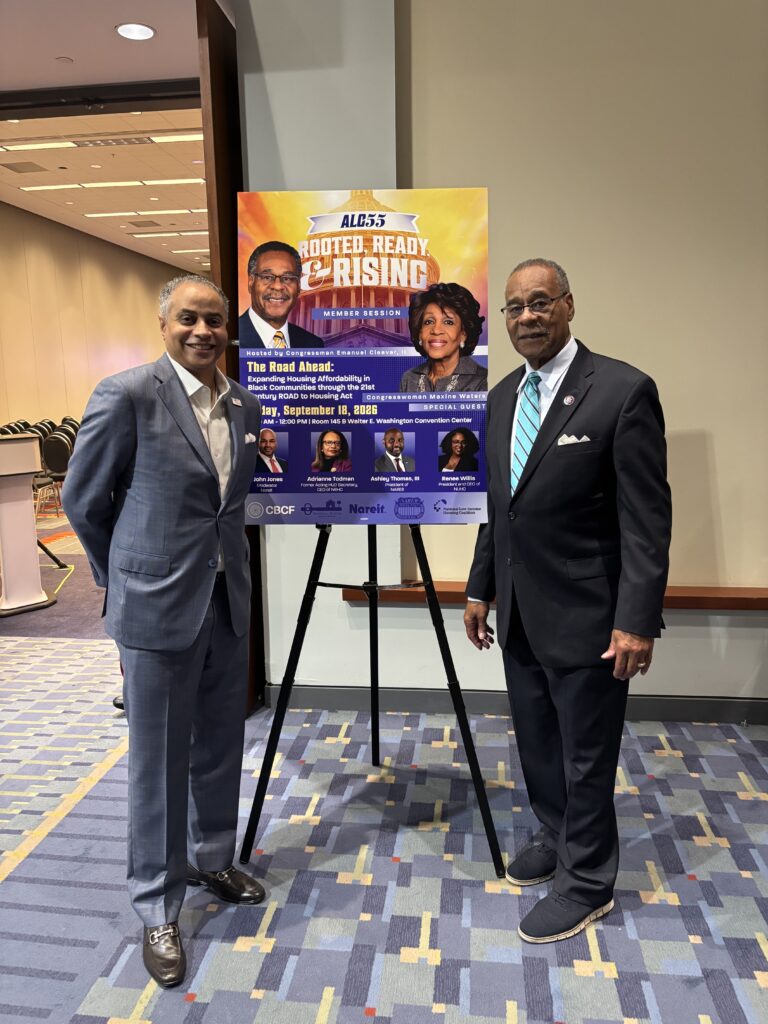
In August, Missouri Congressman Emanuel Cleaver II hosted a housing summit in Kansas City, Missouri, to speak to a new federal law designed to increase the supply of affordable housing. Bill sponsors say that the 21st Century ROAD to Housing Act is the most significant bipartisan housing reform package in nearly 50 years.
Speaking to the collaboration among members of both chambers, housing advocates, lenders, local leaders and stakeholders, Cleaver said the spirit of partnership, “… produced landmark legislation that will expand housing supply, modernize our housing finance system, remove unnecessary barriers to development, and help make homeownership and affordable housing more attainable for millions of Americans.”
For Community Builders of Kansas City, which has developed more than 1,000 units comprised of single-family and multi-family market rate and affordable homes including properties dedicated to seniors, the Act’s significance aligns with the organization’s mission.
“The Act’s emphasis on increasing housing supply, preserving affordability, expanding access and removing barriers to development is consistent with CBKC’s mission to fuel equity, access, opportunity and advocacy in Kansas City’s urban core,” said Emmet Pierson, Jr, CEO. “The opportunity now is to combine new federal tools with local investment to produce and preserve housing at a scale that can strengthen entire neighborhoods.”
As the first comprehensive federal housing package passed in decades, the legislation combines provisions to tackle systemic affordability challenges, including:
- Boosting housing supply: Streamlines federal regulations and cuts artificial red tape to speed up new home construction.
- Restricting corporate buyers: Places caps and strict limits on large institutional investors buying up single-family residential homes.
- Reusing vacant spaces: Funds and encourages the conversion of empty, abandoned or commercial buildings into affordable residential housing.
- Supporting local lenders: Expands the capacity of community banks to issue small-dollar mortgages and fund local home construction.
- Modernizing HUD programs: Updates major federal grants, including Community Development Block Grants (CDBG) and the HOME Investment Partnerships Program.
CDBGs provide federal funding to cities, counties and states for a broad range of community development needs, principally benefiting low- and moderate-income residents.
HUD provides HOME funds to states and local governments to help build, buy or rehabilitate affordable rental and owner-occupied housing and provide direct rental assistance.
HOME helps finance affordable housing itself, while a CDBG can address the broader community development needs that help make neighborhoods viable places to live.
Cleaver, ranking member of the House Financial Services Subcommittee on Housing and Insurance, said he wants Kansas City to be among the first cities to put the new law to work and ultimately serve as a model for other communities.
Kansas City already has momentum. The city established its Housing Trust Fund in 2018 to support the creation and preservation of affordable housing. In August, voters approved another $100 million for affordable housing, giving the city significant local resources that could work alongside the new federal housing tools.
Together, these investments can help bring more housing projects to life, preserve existing affordable homes and extend the impact of this investment into surrounding neighborhoods.
New Property Management Team Builds on CBKC’s Vision
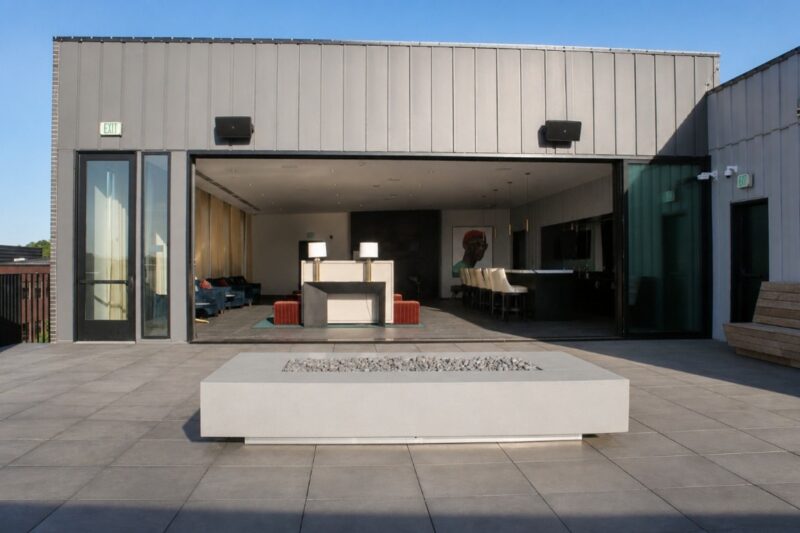
Mallory Belt considers herself lucky to manage The Rochester, Community Builders of Kansas City’s (CBKC) $13 million luxury apartment community and one of the first developments of its kind on Kansas City’s East Side in recent history.
Belt works for Worcester Communities, a 20-year-old family-run property management firm that began managing The Rochester in February.
“Once we saw what was created at The Rochester — an urban Class A property on the East Side that’s home to a tight-knit, multigenerational community where everyone knows each other’s names — we wanted to be part of it,” she said. “It was exciting to see CBKC’s and (president and CEO) Emmet Pierson’s vision come to life.”
With upscale one- and two-bedroom apartments, a state-of-the-art fitness center and multiple gathering spaces, The Rochester is one of CBKC’s transformational developments designed to strengthen neighborhoods and improve quality of life for residents east of Prospect.
“It’s what CBKC stands for – giving back to communities – that drew Worcester to the partnership,” Belt said. “It fully aligns with our values.”
For Belt, managing The Rochester also feels a little like coming home. She grew up near the property and has a strong personal connection to the area.
“When you’re from this area, you really protect it,” she said. “You know the stigma that comes along with it, and you also know that’s not the reality at all.”
She sees that reality every day at The Rochester, where residents look out for their neighbors. If someone is in the hospital, for example, Belt said chances are another resident will let her know. Informal gatherings happen often. At a recent barbecue, residents ranging from millennials to people in their 80s cooked, talked and shared a meal together. During football season, Sunday watch parties are a regular sight at The Nest, The Rochester’s rooftop deck and indoor lounge.
Worcester also plans resident events designed to bring neighbors together. This spring, a “Sips and Succulents” gathering invited residents to paint pots and plant succulents. Residents from 40 of The Rochester’s 64 units attended.
Belt plans to host property-led events at least quarterly, with activities ranging from financial literacy and legal education classes to social events such as a Halloween-themed paint-and-sip.
But beyond the fun, Belt said her top priorities are service and accessibility — making sure residents receive prompt responses to maintenance requests and feel heard.
She keeps regular onsite office hours and makes herself easy to reach.
“A positive resident experience starts with the first phone call,” she said. “I make sure I return prospective residents’ calls right away and offer assistance throughout the application process. For an extra, personal touch, I provide move-in gift baskets with soap, dishwasher detergent, paper towels, a cutting board and toilet paper – items someone may have forgotten but needs on that hectic first day.”
That personal touch continues after move-in.
Belt sends birthday emails to residents and recently handed out care packages filled with motivational messages and self-care items such as eye patches and face masks.
In keeping with CBKC’s emphasis on creating a resident-centered experience that goes beyond housing, Belt also hopes to build partnerships with local service providers and expand programming available to residents. Feedback from a recent tenant survey will help guide the kinds of classes, resources and events offered.
“If new events are well attended, I’d like to increase them to monthly,” she said.
Asked what she envisions for The Rochester’s future, Belt’s answer is immediate: “100 percent occupancy.” The property is currently 96 percent occupied, including the Penthouse, the elevated two-bedroom, two-bathroom unit, with two additional units pending leases and just one unit still available.
Worcester Communities was founded in 2006 by brothers Jesse, Joel and Paul Worcester alongside their father, Doug. The company provides full-service property management for multifamily communities, including leasing, management, accounting, collections, maintenance and rehabilitation. Today, Worcester Communities owns and operates more than 3,500 apartment units across Kansas City, Columbia and St. Louis, Missouri; Little Rock, Arkansas; and Wichita, Kansas.
Why Voting Matters Beyond Election Day

To Lauri Ealom, Kansas City Election Board Democratic Chair, voting is personal, a matter of pride and a tradition her parents instilled in her from a young age. For Shawn Kieffer, Kansas City Election Board Republican Chair, voting is just as fundamental.
Together, Ealom and Kieffer offer a clear, bipartisan message: voting matters, every vote counts and local elections have a direct impact on daily life.
“Local voting is important because many aspects of daily life in Missouri are shaped by elected officials and ballot measures,” Ealom said. “Voting influences who makes decisions about taxes, budgets, laws and priorities at the local, state, and federal levels.”
Those decisions affect far more than high-profile races for president or governor. Local elections determine things like:
- School funding and policies like curriculum and library materials
- Public safety services, crime prevention programs and police/fire/EMS services
- How quickly potholes are repaired
- Utilities and infrastructure such as water quality and sewer improvements
- Cost of living through property taxes, sales taxes and utility regulations
- Local services like libraries and parks
In recent Missouri elections voters have also decided major issues including Medicaid expansion, recreational marijuana legalization, minimum wage increases, transportation funding and local school bond measures. Primary elections also matter because, in many districts, they can help determine who ultimately holds office.
For voters who believe their one vote does not make a difference, both election board leaders say history proves otherwise.
“We have had more than one election decided by just a few votes,” Kieffer said. “Every vote does count.”
Ealom encourages anyone who doubts the process to get closer to it. She suggests serving as a poll worker and strongly urges attending the public tests held before every election, where residents can observe voting equipment testing, ask questions and better understand the protections in place.
Both Ealom and Kieffer stress the importance of the protections in place to make sure elections are secure, accurate and fair. By Missouri law, the process requires bipartisan participation, pre- and post-election equipment testing, chain-of-custody procedures and random recounting. Kieffer said election results are tested and retested several times before they are certified.
Ealom recommends that voters create a plan. She suggests visiting KCEB.org and entering their last name and date of birth. That will show what ward and precinct they are in, where the voting locations are and the sample ballot for their ward and precinct. Voters can then print the sample ballot, research the candidates and issues, fill it out and bring it with them to the polls. Also on the website is a Fair Ballot Language document that explains the ballot questions in easy-to-understand terms.
“This preparation will ensure the voter has a positive voting experience,” she said.
Ealom and Kieffer recognize that there are many reasons people may not vote. Some believe their vote will not matter. Some do not realize how elections affect their daily lives. Others face barriers such as work schedules, caregiving responsibilities, health challenges or transportation issues.
Ealom said voter education is key, including introducing children to voting and civic participation early. She said many people lack exposure to the process or do not understand the history and importance of voting.
Kieffer said people often feel too busy or assume their vote will not affect the outcome.
“But it can,” he said. “Many results could change if voters took voting seriously.”
When more eligible voters participate, election results reflect a broader range of experiences, concerns and priorities and bring more voices into the decision-making process.
“We need everyone’s input to best figure out how this city should run for all of us,” Kieffer said.
Ealom said voting helps ensure elected officials represent a wider range of residents, not just those who participate in high-turnout presidential years. Local and primary elections, which often have lower turnout, can make each vote even more powerful.
For someone who is eligible to vote but has not participated in recent elections, both Ealom and Kieffer encourage a practical first step: begin preparation today.
“Start now,” Kieffer said. “Check your voter registration. Educate yourself about upcoming elections, talk with friends and family about issues and get to the polls. Voting affects everything we do.”
For Ealom, the message comes back to pride, participation and community.
“Voting is not just a political act,” she said. “It is a way for residents to help shape the places they live, the services they rely on and the future they want to see.”
Every election is an opportunity to be heard. And every voter who participates helps strengthen the community they call home.
A Champion of KC’s Critical Organizations
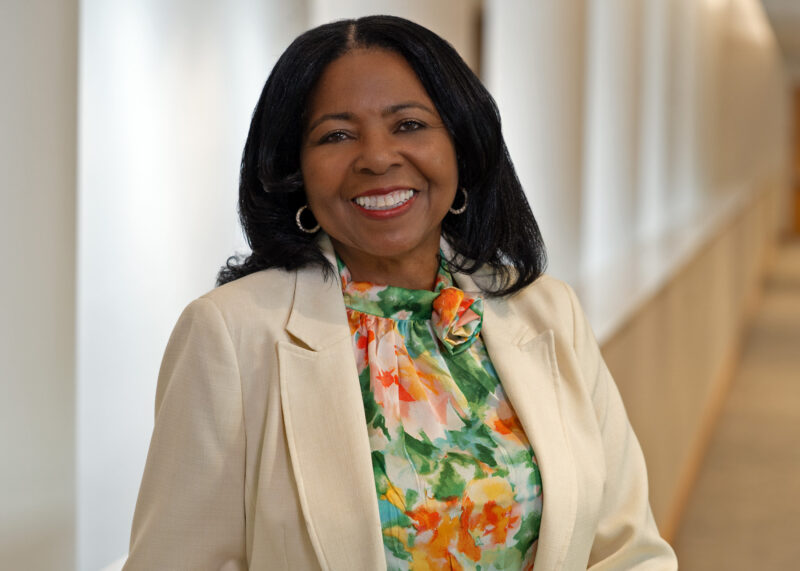
“All the money in the world cannot solve problems unless we work together. And, if we work together, there is no problem in the world that can stop us, as we seek to develop people to their highest and best potential.” Ewing Marion Kauffman
Gloria Jackson-Leathers, senior advisor to the president, community engagement, retires this summer after 28-plus years with the Ewing Marion Kauffman Foundation and this is one of her favorite quotes.
“It just resonated with who I am as a person,” she said. Who that person is was shaped early as she grew up in a loving family in the south; a family that instilled values built on serving people and community that she carried into how she lives her life, and did her work.
That work started in banking where she engaged both banking and community leaders in conversations to learn what each needed from the other, and for banks, to also come to understand how those needs differ from neighborhood to neighborhood. It was on a site visit to Beacon Hill as a community reinvestment officer where she learned about the program officer position at the Kauffman Foundation. That opened the door to her career in philanthropy.
“I had a lot to learn about philanthropy,” Jackson-Leathers said. “However, one thing is the same in banking and philanthropy – relationships are foundational. How you navigate a community is often more important than the dollar, which goes away in time but meaningful relationships last forever”
Jackson-Leathers’ relationship with Community Builders of Kansas City stretches back to CBKC founder Chuck Gatson’s era and continued to the present day. She calls CBKC a “critical organization.”
“Not enough leaders in the community understand the role CBKC plays,” she said. “CBKC touches everything in our underserved communities, taking on challenges and roles that sometimes put them in spaces and places that cost the organization more than they can hope to earn back.”
She said CBKC presents an opportunity for philanthropy, not just the Kauffman Foundation, but the broader philanthropic community, to recognize critical institutions like CBKC and come alongside them to assure their mission is sustainable.
“CBKC takes on so many things for this community that is not even in their mission,” she added. “When you ask the two questions we did when I was leading the Kauffman Foundation’s Civic Team – what would Kansas City be without CBKC and what problem is CBKC solving – you see its critical nature.”
Jackson-Leathers got a close look at our critical institutions after she established the Foundation’s Kansas City Civic department earlier in her career. Its scope was to support community assets that bring organizations together around shared goals. Beyond funding, its work centered on convening leaders, building partnerships and helping community organizations find common ground. The department reflected Jackson-Leathers’ belief that lasting progress comes through relationships and collaboration, with philanthropy serving as a catalyst for communities to solve problems and create opportunity together.
This belief was manifest in two other initiatives that stand out for Jackson-Leathers. One was running one of the Foundation’s largest initiatives, the Kansas City Freedom Schools. A summer enrichment program that teaches students the value of reading with comprehension, Kansas City at one time had the largest number of Freedom Schools in the country. The other was redevelopment of the 18th & Vine District. “We were able to commit $1 million – a large investment for the Foundation at the time – in a program-related grant to support the Jazz District Redevelopment Corporation in planning the district’s revitalization,” she said
Jackson-Leathers brought the values instilled in her by her family – to understand and help meet the needs of people and community – to her work at the Kauffman Foundation. CBKC is grateful for her decades of leadership, partnership and advocacy for Kansas City’s underserved neighborhoods. She has left a lasting mark on the Foundation and the communities it serves.
CBKC Coordinates Rehab Work on the Former Adams Mark Hotel
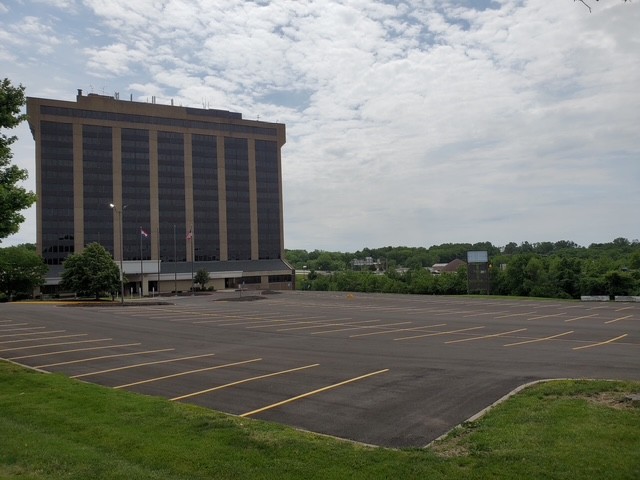
Community Builders of Kansas City recently completed a series of improvements at the former Adams Mark Hotel using a $600,000 Jackson County Nonprofit Partnership Grant.
Opened in 1974, the property closed during COVID in 2020. CBKC acquired the 12.4-acre hotel site at the end of that year for minimal cost. In 2025, CBKC completed and opened the $6.5 million KC Pickle Club in the former CoCo Key location attached to the hotel. Work was needed, however, to restore the property’s surface parking and stabilize and refresh the exterior of the hotel tower, which has nearly 400 rooms across 15 floors.
The scope of the rehabilitation included:
- Paint and replacement of the faded or damaged metal panels on all four sides of the hotel tower.
- Mill, overlay and new striping of all surface parking serving the facility.
In addition, apart from the grant, substantial roof maintenance was completed to assure that the structure is fully dried in.
Strategic planning is underway for the conversion of the hotel tower, meeting and other common spaces that will complement KC Pickle Club, which already has become an attraction not only for the sport but also for corporate or other special events, dining and social gatherings of family and friends. The former Adams Mark initiative is in line with the health and wellness pillar of CBKC’s strategic plan to transform East Side communities.
How to Apply for a Grant to Improve Your Neighborhood

Does your neighborhood need a new streetlight? Would you love to see a beautiful park just down the road? Or do you just need that sidewalk fixed from last year?
Did you know you can apply for a Public Improvements Advisory Committee (PIAC) grant? The city of Kansas City, Missouri’s PIAC program allows residents to apply for improvement projects for their neighborhood.
Read on to learn how to apply.
About PIAC
The PIAC program is a resident-driven initiative in Kansas City, Missouri, that allows you to recommend specific capital improvement projects for your neighborhood. Unlike traditional grants that give money directly to an organization, PIAC uses a portion of the city’s one percent sales tax to fund and manage the construction of public infrastructure.
Key Program Details
- Funding Amount: Approximately $5.7 million is typically allocated to each of the six City Council districts annually.
- Eligible Projects: Projects must serve a public purpose. Common examples include:
- Infrastructure: Sidewalks, curbs, gutters, street resurfacing, and streetlights.
- Public Safety: Stormwater drainage, traffic lights, and bridge repairs.
- Parks & Rec: Improvements to community centers, playgrounds, swimming pools, and park facilities.
- Who Can Apply: Any resident, neighborhood association, or business in KCMO can submit a request. The closing period for this year is August 31, 2026.
Application & Timeline
The PIAC process follows a specific annual cycle and currently is in the following phase:
- Current Status: Applications are now being accepted for Year 44 (2027–2028) funding.
- Deadline: The application period ends August 31, 2026.
- Hearings: During the summer months, PIAC holds public hearings in each district where residents can testify in support of their projects.
- Decisions: Applicants are typically notified of the committee’s decision in April of the following year, with funds allocated in May.
Tips for Success
- Demonstrate Support: PIAC prioritizes projects that impact a large number of people. It is highly recommended to include a petition signed by neighbors or letters of support from community groups. It is also recommended to attend the summer public PIAC hearings. Two hearings are held each summer within each district.
- Be Specific: Provide photos of the problem area and clear descriptions of the needed repair or improvement.
- Consult Your District: You can find your district on the KCMO Council District Map to identify which PIAC representatives to contact.
To apply or learn more, go to https://www.kcmo.gov/programs-initiatives/public-improvements-advisory-committee-piac. For specific questions, you can contact the PIAC office at (816) 513-1062 or by email at piac@kcmo.org.